 EN
EN
 ES
ES
 FR
FR
 IT
IT
 DE
DE
 PL
PL

Is It Cheaper to Buy Tickets at the Airport? The Real Cost Breakdown
No, going straight to the airport is not a cheaper option for most passengers, yet, yes, sometimes it can be done, saving real money under certain cir...
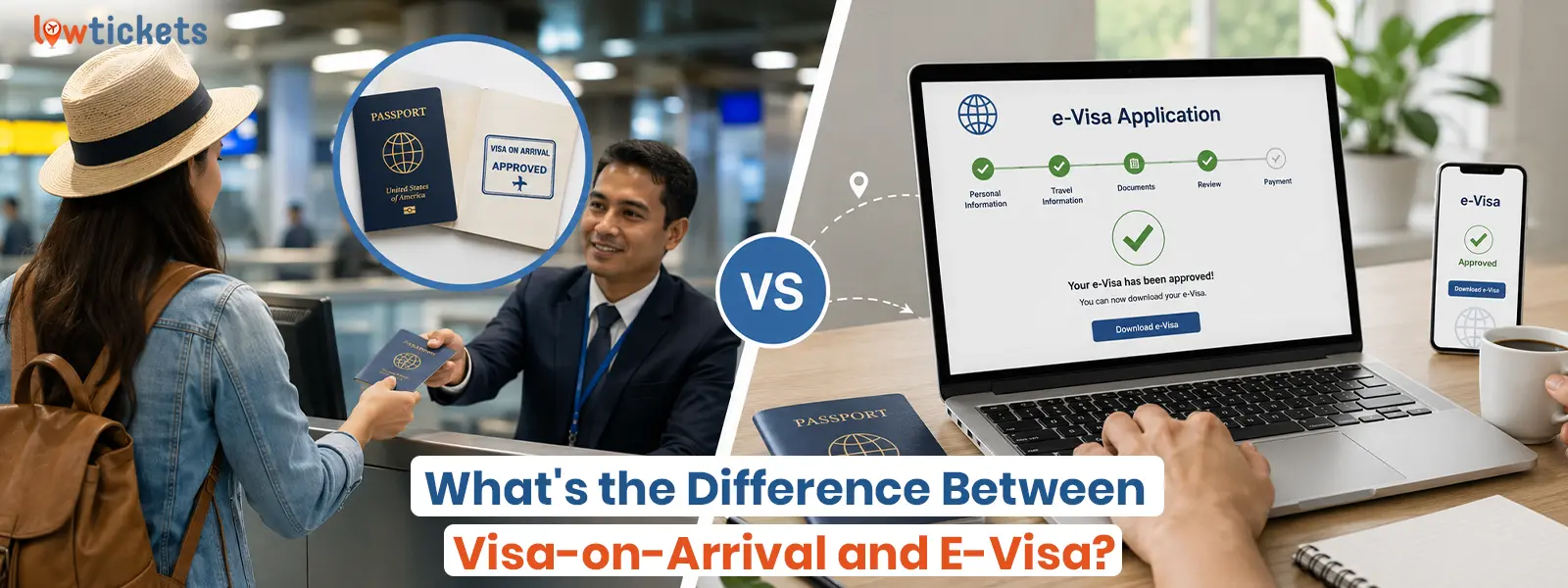
When planning an international trip, things can be complicated with visa requirements and two terms that confuse even experienced travelers are the following: visa-on-arrival and e-visa. Both offer an easier term to the more cumbersome routine of an embassy visit, but they differ in each other in many respects. If the wrong one is selected, or if one isn't even realized what it requires, it can mean scrambling at an immigration counter or even not landing your flight at all. This is an explanation of how they all work, what forms and costs they require, and where they are most commonly available.
If you're pressed for time, check out this short version. This is when the visa is physically given at the airport or land border, and typically involves standing in line, completing a form, and paying in cash or card. An e-visa, however, is filled out and granted online prior to leaving the home country and is attached electronically to your passport. Choosing the wrong visa type can lead to the same headache as a visa rejection, so it's worth confirming requirements before you fly.
The main difference between visa on arrival and e-visa is the place and timing of the approval: visa-on-arrival at border, e-visa beforehand via the internet.
|
Feature |
Visa-on-Arrival |
E-Visa |
|
When you apply |
On arrival at the port of entry |
Before departure, online |
|
Processing time |
Minutes to an hour |
1–7 days typically |
|
Approval certainty |
Decided on the spot by an immigration officer |
Confirmed in advance, before you travel. |
|
Application method |
In-person, paper forms |
Digital, via website/portal |
|
Payment |
Usually cash, sometimes card |
Online payment gateway |
In short, knowing these differences can help to smooth the way on the trip and avoid inconveniences at immigration.
So, what is visa on arrival, exactly? A document which the immigration authority of a state issues to a visitor in the airport, seaport, or the land border of the country in order to allow entry to the state, but it does not necessitate the approval of the applicant beforehand. It's easier than going to the embassy or filling out a website form, weeks ahead of time, and then paying some money and getting a stamp, it's just come with your passport, fill out a few sheets, pay a fee and then you get the stamp on your passport. It's meant to be a shortcut for citizens of countries that, in general, have less visa-risk countries, bypassing the myriad forms of the formal application process at an embassy. If your documents don't check out at the counter, this can escalate into the same situation as a denied boarding case, so it pays to double-check requirements in advance.
The visa-on-arrival process at airports can be tackled in a sequence, facilitating a hassle-free passage of travellers to their country of destination.
The entire process may take about 10 minutes to more than an hour, depending upon the level of airport congestion and the number of counters that are available to handle it.
Registering for a visa-on-arrival, there are some important documents that are generally needed for a streamlined procedure to enter.
If any of these are missing, then there might be delays or even rejection that you'll face at the counter, depending on the rigor of the jurisdiction. Keep your travel documents as organized as you would for a lost baggage claim — having everything ready saves time at every step of the trip.
Over several regions Visa-on-arrival is still a popular option, especially for those people from countries that do not require visitors to fill paperwork prior to arrival. Some common destinations that typically include this are:
These programs depend mostly on passport; for a certain country, visit its immigration website near the date of your trip, as the list of nationalities that are eligible and the conditions to enter the country are subject to changes as a result of diplomatic relations and policy changes.
Now, let's join the dots on what is an e-visa. An e-visa is an official travel visa you apply for completely online, via a governmental website, prior to travelling. It is electronically linked to your passport number in the destination country's immigration database and therefore not required to be collected in advance, there is no stamp or sticker. At the point of arrival they check your passport against their records – if it corresponds they let you in. It's a digital version of the physical visa, all without the paperwork or in-person requirement, but with the same pre-approval process.
The e-visa application process is simple, you can complete your e-visa in an effective way that follows the below steps.
A printout copy or having it saved on your phone is advised in many countries because people in the airline industry or the countries you are going to may require to see a copy before boarding or upon your arrival.
When applying for an e-visa, you'll need several key documents to ensure a smooth application process.
Due to all the required activity occurring in digital format, it is important to ensure accuracy. Make sure that the spelling of your name matches the one on your passport, or else you run the risk of having the delay or being denied entry.
To expedite the visa application process, many places have started accepting e-visa applications from qualified travelers. Visitors are not required to submit applications to an embassy, but can fill out the application completely online prior to departure. The following countries can be listed as the most frequent countries giving e-visa facilities:
The requirements for applying for an e-visa and the eligibility vary from country to country and may change from time to time, so always check the most recent visa rule of the destination country prior to making travel plans.
While both visa on arrival and e-visa are making travelling internationally simpler, they differ in the manner in which, as well as when and where, the application and approval procedure is completed. Here are the highlight features distinguishing them:
|
Feature |
Visa-on-Arrival |
E-Visa |
|
When You Apply |
Apply when they reach the airport, seaport or land border. |
Online application before your trip (typically days/weeks prior to the trip). |
|
Processing Time |
This will take place at the port of entry, usually in 10-60 minutes, depending on the time of year. |
Processing generally takes between a few hours and 7 days, depending on immigration laws of the desired country. |
|
Approval Certainty |
Decision is made on the border by an Immigration Officer who will look at your documents. |
Before travelling they receive approval; thus they leave with more confidence. |
|
Cost & Payment |
Fees are payable at the immigration formalities and are usually in cash, but some countries are able to accept card payments. |
An Internet e-banking platform provides transparent and publicized charges for payment of fees. |
|
Application Method |
Must fill out forms and present documentation at time of arrival. |
Fully paperless to enable applicants to submit applications, upload documents and pay online from anywhere. |
|
Convenience |
Likely to be convenient if short notice travel is required, but may lead to a longer waiting line at immigration and delays. |
More convenient to traveller who would rather finish formalities prior to travelling rather than at destination. |
|
Best For |
Those who visit countries that easily issue entry visas at the border and feel able to deal with border immigration procedures. |
Passengers who want to come in, without hassle, to the airport and entry approved ahead of time. |
The distinction between an e-visa or a visa-on-arrival is when entry is granted. An e-visa gives proof of your travel authorization from before you leave, thereby decreasing ambiguity and chances of any issues at check-in or immigration upon arrival. A visa-on-arrival, on the other hand, entails the approval of immigration authorities upon arrival, which may extend the time waiting and a recheck of documents.
It's also important to know how both compare with the older "embassy visa" way. When comparing e-visa vs. embassy visa vs. visa-on-arrival, remember that an embassy visa is the slowest and requires the most documentation, including an in-person interview. Then you need to remember that embassy visa is the one that is slowest and it is the one in which more documents are required. In addition to this in person interview is also required in this. To overcome these issues e-visa and on arrival visa have stepped in
It's important to be aware of the pros and cons visa on arrival before traveling to decide if it is the best choice for your itinerary. It provides some flexibility and ease of travel for qualified visitors but certain restrictions should be taken into account before you leave.
A visa on arrival has a number of practical advantages for travelers who do not intend to go through the process of applying, awaiting results and then traveling on a visa.
In sum, for those who want the convenience and flexibility, a visa-on-arrival may be right for them, if they've read the entry requirements and are willing for what they have to go through.
Despite being a convenient type of visa to receive, there are some drawbacks to visas issued after arrival that could impact your travel experience.
It's important to be aware of these disadvantages in order to plan accordingly and determine if a visa-on-arrival will be the best visa type to apply for.
An e-visa is an up-to-date digital visa that enables applicants to eliminate all the steps and requirements of the traditional visa application and process before the travel. It offers increased security, but also demands some forethought.
It is advisable to apply for an e-visa prior to travelling in order to facilitate the entire process of travel and make it smoother and predictable.
If you are looking for a well-planned tour and a smooth arrival at the airport, an e-visa is a better option.
While e-visas ease the visa application process, they do come with some disadvantages the travellers should be aware of.
Recognizing these restrictions and act early, travelers can be aware of and resolve the potential problems that arise and benefit from the convenience of an e-visa. This mirrors how airline flight cancellation policies work — booking flexibility matters just as much as visa flexibility when plans change.
Frequently Asked Questions ?
Is an e-visa the same as an ETA?
Not quite. An ETA (Electronic Travel Authorization) typically is a less stringent screening for travellers with a lower risk, as compared to an e-visa which requires a more stringent visa procedure. Both are on-line, but there are differences in both requirements and scrutiny.
Can visa-on-arrival be denied at the border?
Yes. Approval isn't guaranteed. Even if you come from a nationality of origin that is entitled to use the visa, Immigration officers can refuse entry if your paperwork is incomplete, you have no apparent cash, or your motives for travelling give them cause for concern.
Which is faster, e-visa or visa-on-arrival?
The e-visa is typically quicker as it gets pre-processed before travelling, avoiding the need to pass through a specific counter at the airport for landing visas and being processed at the immigration counter.
Do I need to print my e-visa before traveling?
Although the e-visa is electronically attached to your passport, many airlines still ask for proof of an e-visa (printed paper copy) for boarding. Also, staff at the destination country border control often request to see the e-visa copy when arriving.
Explore More Articles
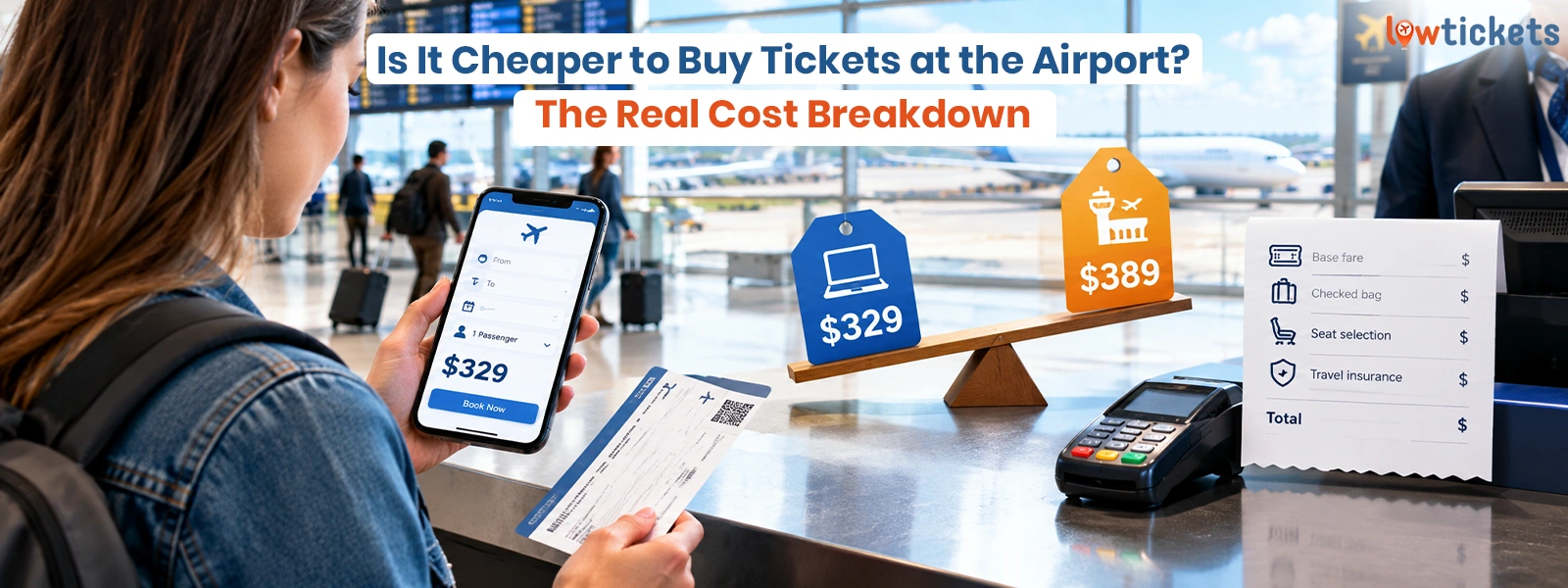
Is It Cheaper to Buy Tickets at the Airport? The Real Cost Breakdown
No, going straight to the airport is not a cheaper option for most passengers, yet, yes, sometimes it can be done, saving real money under certain cir...

Best Places to Visit in Northern Italy Top Cities Worth Exploring
Deciding on where to go in the North of Italy becomes hard as there is much more to offer than just one typical tour route. Traveling in an absolutely...

The World’s Most Beautiful Sunsets Best Places to Watch the Sky Light Up
Have you ever been in a place where you had to experience "sunset time" and ended up catching just a part of it or even missing it due to th...

Qatar Airways Phone Number How Do I Speak to a Live Person?
You have landed here, and gravitation has no role in it, but the right connection is between your quest and solution. Hence, your searching spree for ...

Lowtickets is the smart choice for travelers who want it all, low fares, fast booking, and dependable support, built into one simple platform for every journey.
Quick Links
Top Destinations
Copyright © 2021 - 2026, Lowtickets. All rights reserved.

For exclusive last-minute flight deals, Our customer support team is available 24/7 to provide quicker assistance. Reach out at +1-800-984-7414. Get Amazing Deals on Flight Bookings.