 ES
ES
 IT
IT
 DE
DE
 PL
PL
Is It Cheaper to Buy Tickets at the Airport? The Real Cost Breakdown
No, going straight to the airport is not a cheaper option for most passengers, yet, yes, sometimes it can be done, saving real money under certain cir...

 24/7 Flight Support
Click To Call
24/7 Flight Support
Click To Call
Call Us — Choose Your Region
24/7 support available in your language
 English
 French
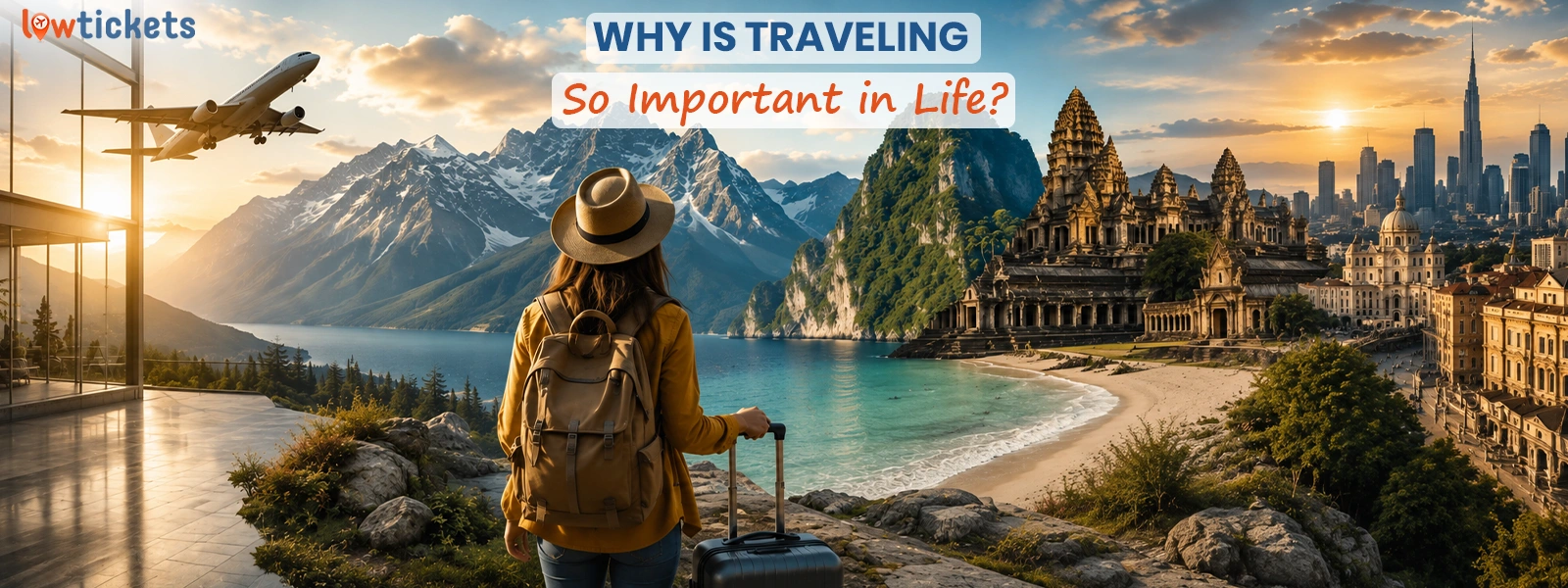
Table Of Content
Traveling is important because it gets you out of your comfort zone and shows you new things about life as well as making you learn and see things that you would never have learned otherwise in life.
Therefore, travelling go far beyond getting a pretty picture or taking a break from work, as research suggests that regular travel is actually good for your mind, helps you develop better interpersonal relations, problem solving skills and even helps with career development.
In this guide, we will known why and how travelling is so important to us and what are the experience or its benefits.
The advantages associated with traveling affect practically all areas of an individual’s life, from his thought processes to social interaction, and having a knowledge of those aspects can be useful in order to distinguish the experience from mere relaxation at home. Unlike with any other activity, which usually has one main benefit associated with it, travel provides a whole bundle of advantages.
|
Category |
What Travel Typically Improves |
|
Mental wellbeing |
It reduces stress, breaks up routine, and offers a genuine mental reset |
|
Personal growth |
Building independence, adaptability, and confidence in unfamiliar situations |
|
Relationships |
Strengthens bonds with travel companions, family, friends and improves communication skills |
|
Career development |
Enhances cultural awareness, networking opportunities, and adaptability at work |
|
Physical health |
Encourages more movement, better sleep patterns, and healthier daily habits |
Travel provides a real break from the routine, the deadlines and various other stress-related aspects, and the change of scenery usually results in some improvement of mood and increased mental clarity. Change of the scenery disrupts the thought patterns that cause the feeling of being trapped into stressful situations. This is one of the reasons why even short travel can make a person feel much better.
Taking all of these factors into account explains why traveling is used as a means to deal with stress, not just as a way of getting distracted.
Traveling means finding oneself in the new situation and solving problems when there is no place for one's habitual support structures. This hands-on experience provides people with a type of confidence and adaptability that cannot be acquired during conventional education or professional activities.
As one can see, those lessons are not included in the curriculum, but it does not diminish their importance. Quite the opposite! That is why people call travel one of the most effective types of education.
Traveling with friends and family members produces those moments that cannot be reproduced in daily life, making it memorable. Discovering the new place as a group, solving the issues collectively, and breaking out of comfort zones with all this unites people and improves communication skills in a genuine way.
Regardless of traveling with someone or alone, the social experience of travel usually lasts longer than travel itself and often changes the way of communication with others as well.
The act of frequently traveling can really help one’s career, especially when working in industries that require resilience and good communication skills, which happen to grow naturally during travel. The ability to cope with challenging situations is becoming increasingly valued by employers, and this trait just grows out of traveling.
Although it may not be the only thing needed to achieve career success, travel does contribute to one’s efficiency in the modern workplace environment.
Traveling helps to develop healthier habits for one’s daily life, even though it may not be the main aim for booking one's vacation, because it is natural to have increased physical activity, improve sleep, and break usual habits while being somewhere new. This physical improvement comes in addition to mental and emotional improvements and allows making travel a complete habit.
None of these improvements requires booking an adventure trip either, as any kind of traveling will allow having higher activity level than usually.
New places bring about new experiences for travelers in terms of seeing, hearing, eating, and thinking differently. Novelty stimulation has been proven to truly improve one’s creativity by forcing the brain to make connections instead of falling back on the usual ones. Breaking away from one’s everyday environment makes assumptions questionable and offers new perspectives that are hard to achieve by just being in one’s familiar surroundings all the time. It’s also the reason why there are so many successful people who claim that traveling has inspired some of their greatest works.
Frequent traveling does not necessarily mean having an endless amount of money and spare time because there is a lot of ways to become a frequent traveler without huge efforts and extra money.
Travel is important since it has to do with almost all aspects of life, including clarity of mind, well-being, social life, and career. You don’t need a luxurious vacation in order to reap the positive effects of traveling; just occasional travel in your free time can contribute to it. And if you haven't traveled before, there's nothing better than getting started on that.
Just pick one destination from around you and make a schedule to go there in the next couple of months.
What are the top psychological benefits of traveling?
The major benefits include reduced stress levels, breaking up of routines, and getting a mental restart, all of which result in better moods and improved overall psychological wellbeing.
Does traveling increase your IQ or at least open up your mind?
Yes, because traveling is an experience that will allow one to challenge his or her existing beliefs and come up with new ones, thereby improving creativity and changing one's mindset.
Is solo traveling better than traveling in company?
There are many pros in both solo and company traveling because solo travel makes you more independent and confident and traveling in company makes you closer to people who surround you.
Is it really possible that traveling will be useful for my career?
Sure, it is because traveling makes you more adaptable and improves your ability to solve problems, which become more necessary in modern business world.

Explore More Articles

Is It Cheaper to Buy Tickets at the Airport? The Real Cost Breakdown
No, going straight to the airport is not a cheaper option for most passengers, yet, yes, sometimes it can be done, saving real money under certain cir...
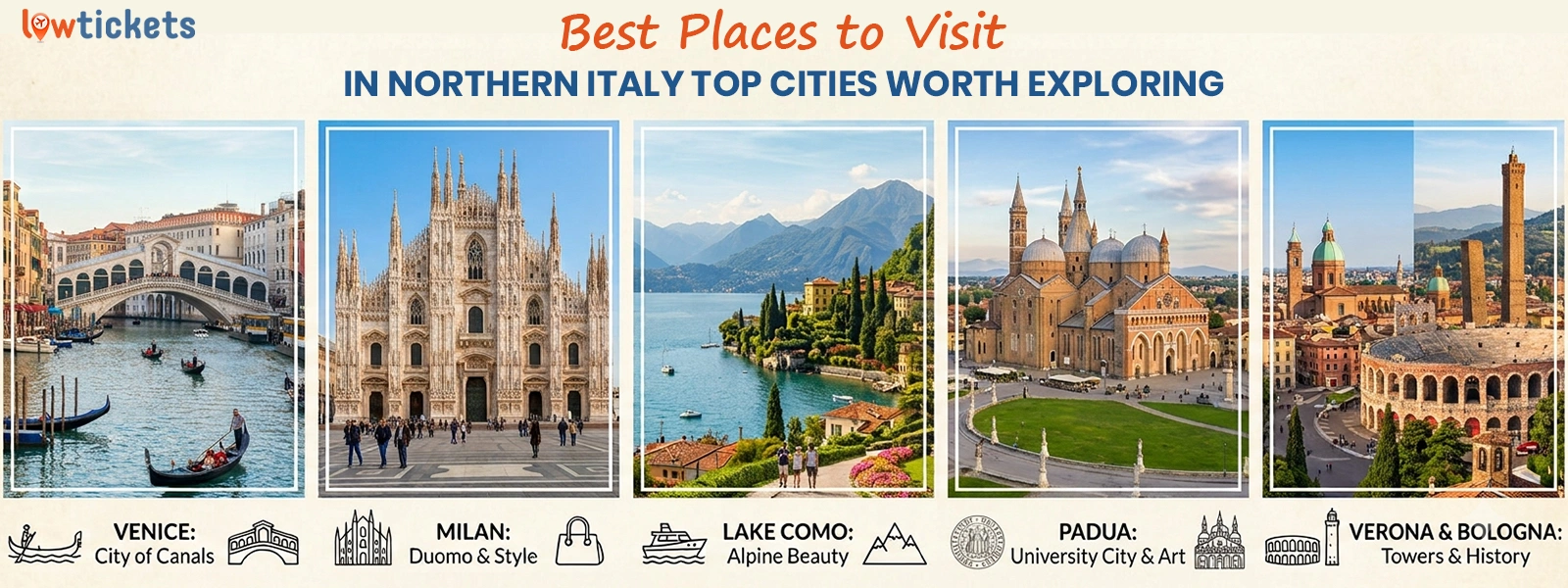
Best Places to Visit in Northern Italy Top Cities Worth Exploring
Deciding on where to go in the North of Italy becomes hard as there is much more to offer than just one typical tour route. Traveling in an absolutely...

The World’s Most Beautiful Sunsets Best Places to Watch the Sky Light Up
Have you ever been in a place where you had to experience "sunset time" and ended up catching just a part of it or even missing it due to th...

Qatar Airways Phone Number How Do I Speak to a Live Person?
You have landed here, and gravitation has no role in it, but the right connection is between your quest and solution. Hence, your searching spree for ...
Lowtickets is the smart choice for travelers who want it all, low fares, fast booking, and dependable support, built into one simple platform for every journey.
Quick Links
Top Destinations
Copyright © 2021 - 2026, Lowtickets. All rights reserved.